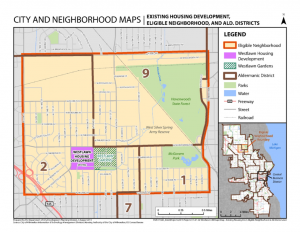
Radon Mitigation Systems located in Hillside/ Lapham Park, Milwaukee, Wisconsin
Milwaukee's Hillside / Lapham Park has tested high for radon.
Hillside / Lapham Park
Hillside / Lapham Park
Hillside/Lapham Park is bordered by I-43 to the north, Halyard Street and 6th Street to the east, Fond du Lac Avenue which is to the south, and I-43 located to the west. It includes Carver Park, which was known as Lapham Park until the 1950s.[19]
The historic Pabst Brewery Complex is situated in the far southwest corner of the Hillside neighborhood. The Pabst brewery was closed in 1997; however, the property is under redevelopment and speculation development.
Hillside/Lapham Park is area where revitalization is in progress to become an exciting revitalized addition to Milwaukee. i. Enjoy all that Lower Walnut Street, has to offer.
Lapham Park is conveniently located near easy freeway access, downtown attractions, hospitals, public and technical schools, restaurants, parks, and it’s right on a bus line. Freeways, parks, buses and streets, this city neighborhood has it all.
Radon
Radon and your health
Radon is the second leading cause of lung cancer in U.S. and Canada. As radon breaks down it forms radioactive particles that can get lodged into your lung tissue as you breathe. The radon particles release energy that can damage the cells in your lungs. When the cells in your lungs are damaged, there is the possibility of developing lung cancer.
If you smoke and you live in a home with a high level of radon, you are at an even higher risk for lung cancer.
Radon gas? What's that?
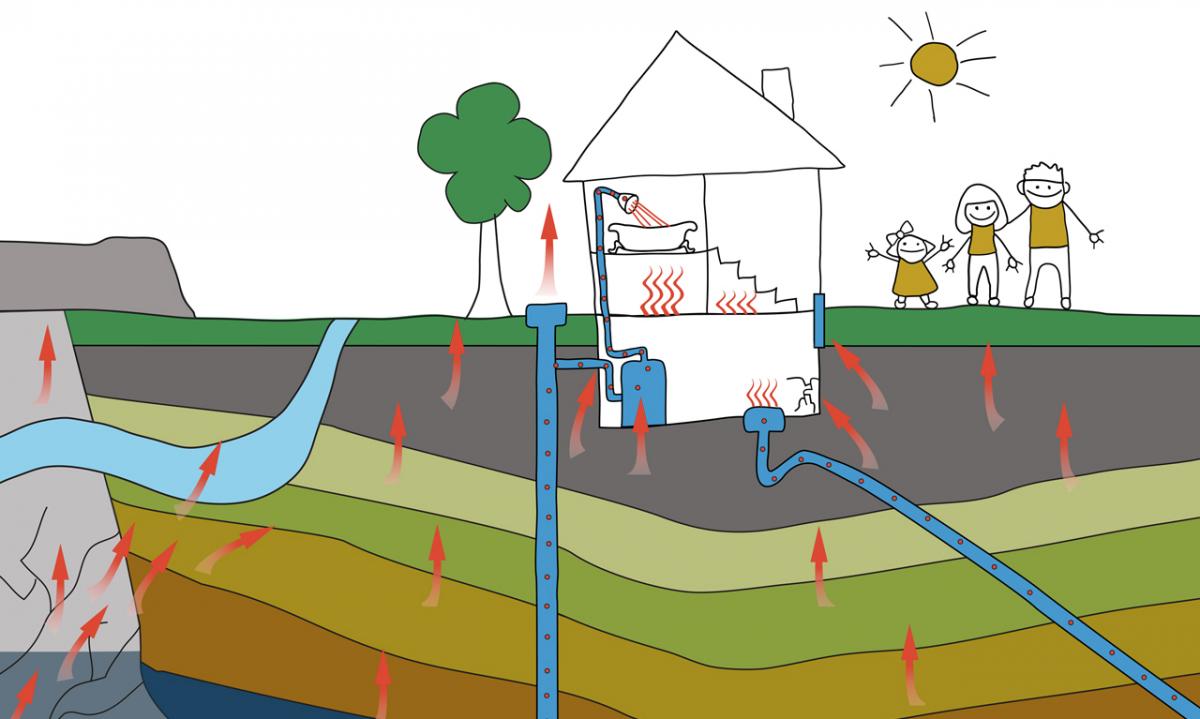
Radon is an invisible, odorless gas that can seep into your home through cracks in floors, walls and foundations. You can't see radon. You can't smell it or taste it.
Radon comes from the natural breakdown of uranium in soil, rock and water. Radon gas escapes from the ground into the air outside. When radon mixes with the air outside, it’s not a problem: the air outside dilutes the amount of radon. But when radon seeps into a closed-in space like a house, it can be harmful. The radon gas can become trapped inside. You and your family can breathe in high levels of radon without knowing it.
How does your house get radon?
Some folks live in their homes for many years and never realize it could be full of radon. It comes in through cracks in the basement floor or concrete floors and walls and won't go back from where it came from. It is stuck in this space. Then, when a person breathes in the air gas, it can get stuck in the human lungs. There, it can be dangerous as it can develop into radon-induced lung cancer. Don't live with radon, fix it!
Contact us
Hillside / Lapham Park
, Milwaukee, Wisconsin
Nearest Zip Codes:
53202 - Milwaukee, WI
53203 - Milwaukee, WI
53212 - Milwaukee, WI
53205 - Milwaukee, WI
53206 - Milwaukee, WI
53233 - Milwaukee, WI
53211 - Milwaukee, WI
53204 - Milwaukee, WI
53208 - Milwaukee, WI
53215 - Milwaukee, WI
53210 - Milwaukee, WI
53216 - Milwaukee, WI
53295 - Milwaukee, WI
53207 - Milwaukee, WI
53209 - Milwaukee, WI